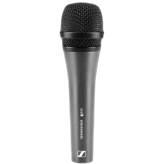
t.bone RB 100 Reviews: See Why 0 Shoppers Rated It 0 Stars!
Curious about the t.bone RB 100 microphone? Before you commit, see what 0 musicians thought about these t.bone microphones — from real-world use to surprise letdowns.
 Supermod
  Moderator
 Recaptor
 t.bone RB 100 Ribbon Microphone Review
For anyone navigating the complex world of studio microphones, the t.bone RB 100 ribbon mic stands out as a testament to classic audio engineering fused with practical design. Built primarily for studio recording, broadcast, and instrument capture, this microphone continues to maintain relevance despite its release dating back to 2000.
What makes it notable on paper is its combination of a bidirectional ribbon element with a large diaphragm designed to capture warm, natural sound profiles, offering intermediate and professional users a solid option within a budget. So, does it really live up to its numbers? Let's dive deeper to uncover what this mic brings to the table based purely on its verified specifications.
Detailed Specs & Features
The t.bone RB 100 is defined by its core identity as a ribbon microphone, leveraging a large diaphragm capsule designed to deliver a smooth frequency response starting at 30 Hz and topping out at 15,000 Hz. This range is ideal for capturing rich lows and clear highs without the harshness often associated with condenser mics.
The bidirectional polar pattern fosters a natural soundstage by picking up sound equally from the front and rear, making it excellent for recording duets or instruments with an ambient room feel. Connectivity is via a standard XLR wired interface, ensuring compatibility with mixers, audio interfaces, and PA systems; essential for versatile studio environments.
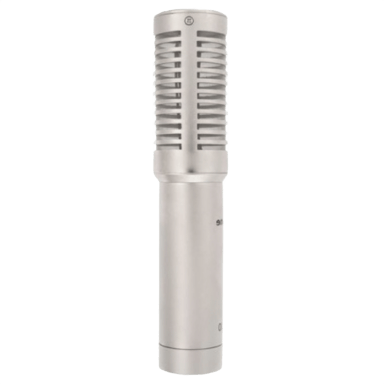
This model is passive, with no phantom power requirement, relying solely on the ribbon design, which means it's robust against power surges and won't risk damage from improper phantom power application. Physically, its side-address form factor and compact dimensions of 2 inches width, 2 inches depth, and 7.9 inches height keep it unobtrusive in the recording setup.
The metal body is coated in matte finish and a mesh grill, reinforcing durability, paired with a swivel and pivot mounting capability that enhances placement precision. Package completeness is acceptable, with adapters and a mounting clip included, though no cables or stand come with the mic, placing the onus on users to prepare their rig.
User Experience & Performance (Based On Specs)
Design & Build
The t.bone RB 100's strong metal chassis and foam internal dampening help dissipate shocks somewhat, although its lack of an internal shock mount or water and dust resistance means careful handling is advised. Its detachable mount and compatibility with standard 5/8" mounts give flexibility, but the absence of any built-in pop filter or windscreen might challenge outdoor or less controlled environments. The mic's simple black matte aesthetic is practical and timeless, appealing to studios valuing functionality over flash.
Performance
On the technical side, the ribbon element delivers a maximum sound pressure level (SPL) tolerance of 148 dB, which is quite high and promising for capturing loud instruments without distortion. Sensitivity sits at -54 dB, meaning the mic is moderately sensitive and will benefit from quality preamps to bring signals to optimal recording levels.
Notably, the mic includes a transformer-based design, contributing to its classic tone and balanced output impedance of 200 ohms, supporting low noise transmission over extended cable runs. The mic forgoes digital or smart features like DSP processing and has no onboard controls, so users rely on external equipment for gain adjustments and sound shaping. Its output is strictly analog and balanced, reducing interference, and it includes shielding against RF interference, enhancing reliability in mixed technical environments.
Audio Quality
The ribbon velocity principle governs its acoustic design, promising a natural transient response rated as medium, balancing warmth and articulation. The bidirectional pattern means recordings gain a stereo-like depth, yet it lacks proximity effect control and voice isolation features, which might impose challenges in noisy or reverb-heavy spaces.
Still, for controlled studio use, the mic's "medium" transient response and relatively flat frequency response suggest it's capable of delivering quality vocals, brass, and string recordings with a smooth character uncommon in budget models.
Extra Features
Advanced conveniences are minimal here: no mute switches, no gain control, no LED indicators, nor integration with software or smart devices. This stripped-back approach reinforces its identity as a classic studio tool rather than a gadget, which some users will appreciate for reliability and straightforward upkeep.
It's also worth acknowledging that this mic supports a 3-year warranty and meets various certifications like FCC and RoHS compliance, reflecting solid build quality and safe operational standards.
Pros & Cons
Pros
- Robust metal build with matte finish, ensuring durability
- High maximum SPL tolerance of 148 dB, suitable for loud sources
- Balanced analog output with shielding against RF interference
- Affordable price with a 3-year warranty and safety certifications
Cons
- No onboard controls or phantom power support limit flexibility
- Absence of a shock mount, pop filter, or windscreen may necessitate additional accessories
- Limited to studio and broadcast applications due to a lack of environmental resistance
- Average sensitivity and no noise isolation features restrict use in noisy settings
Price & Value For Money
Priced at only $64.01 at Reverb.com, the t.bone RB 100 is a remarkably accessible entry into ribbon mic territory. Given its 3-year warranty and passive design with a comparatively high maximum SPL, the pricing feels justified, especially for studios that require vintage tonal character without breaking the bank. Those seeking advanced features like DSP or onboard controls may need to look elsewhere, but for pure analog warmth and reliability at this cost point, it's a compelling value proposition.Quick Take
In short, the t.bone RB 100 scores high on build quality and raw analog audio performance, especially impressive at its price range. If we look at the numbers alone, it offers a sound profile favorable to vocalists and instrumentalists seeking natural warmth and detail. However, there are many modern conveniences that many users expect today.Closing Recommendation
The t.bone RB 100 may be ideal for intermediate to professional users who prioritize authentic ribbon mic sound and sturdy build over digital features or portability. It appears to perform best in controlled studio or broadcast settings where its bidirectional pattern and high SPL can shine. For those needing rugged field use or direct-to-computer functionality, other models may better fulfill those needs.Verdict
Rating: Based on the specifications and overall feature set, we believe the t.bone RB 100 deserves 4.2 out of 5.
- Winner Feature => Its robust metal construction, combined with a high SPL tolerance, offers excellent durability and recording dynamic range at an affordable price.
- Needs Improvement => Lack of onboard controls, shock absorption, and environmental protection limits flexibility in diverse recording scenarios.
Reviews 0
The good, the bad, and the brutally honest.Average Rating


More Microphones 1229
Unlock more awesome finds.